
Faith Is Not a Feeling
Understanding how to trust God…
By Ney Bailey
I poured myself a glass of ice-cold lemonade, sharpened a pencil, and pulled out my Bible, eager to begin my assignment. Earlier in the day the professor for my summer school Bible course had instructed us, “Bring back to the class a report on everything the book of Romans has to say about faith.” It sounded like an easy assignment, one that wouldn’t take me long.
But I was in for a surprise. I soon discovered that the word faith appears numerous times in Romans and that my study would take longer than I’d thought.
Defining faith
As I read what Romans had to say about faith, I found myself asking, Faith is probably the most important thing in my life, but how do I define it? What is it?
My mind flashed back eight years when I first joined the Christian organization, Campus Crusade for Christ. Back then I didn’t understand a walk of faith. I’ve come so far in my understanding, I thought. But even with all that I’d learned about faith, I realized that I still couldn’t define it.
I knew that the Bible made hundreds of references to faith, such as “The just shall live by faith”1 and “This is the victory that has overcome the world—our faith.”2 But I was surprised that I couldn’t come up with a simple, personalized definition of the word; I had never completed the statement: “For me, faith is ___________________.”
I prayed, Lord, how would You define faith?
A story came to mind in which Jesus had told someone, “Not even in Israel have I found such great faith.” What was it that Jesus had called “great faith”?
I quickly looked up the passage in Luke 7 about the centurion who was willing to believe that Jesus could heal a loyal and trusted servant who was near death. The centurion told Jesus, “Just say the word, and my servant will be healed.”3 Then the centurion used a personal example to illustrate that he understood what it meant to be taken at His word and obeyed.
 In response to the centurion, Jesus turned to the crowd that was following Him and said, “I say to you, not even in Israel have I found such great faith.”4 Jesus seemed to be saying that “great faith” was simply taking Him at His word.
Could this definition be confirmed elsewhere in Scripture? Since Hebrews 11 is often referred to as “faith’s hall of fame,” I turned there.
Taking God at His Word
After reading and rereading the passage, with all its references to the phrase “by faith,” I began to see that all the people mentioned had one thing in common: No matter whom the writer of Hebrews was talking about, each person had simply taken God at His word and obeyed His command. And they were remembered for their faith.
For example, God told Noah to build an ark because He was going to bring a massive flood. Noah took God at His word and built the ark.5
God told Abraham to go out to a place that he would receive as an inheritance. Abraham took God at His word, left his familiar surroundings, and he went.6
God indicated to Sarah, who was long past the age of childbearing, that she would conceive a son. The Scripture states: “She considered Him faithful who had promised.”7 She took God at His word.
Regardless of circumstances, despite arguments of logic and reason, and regardless of how he or she felt, each person mentioned in Hebrews 11 believed God and His word and chose to be obedient.
I began to wonder, If Luke 7 and Hebrews 11 illustrate great faith, is there a passage that illustrates a lack of faith?
Then I remembered an incident from Mark 4 in which Jesus had just finished a full day of preaching and teaching by the shores of Galilee. He instructed the disciples to go to the other side of the sea. Initially, they took Jesus at His word, got into a boat with Him, and headed for the other side. But when a storm arose, they grew fearful and lost confidence that they would actually reach the shore. When Jesus asked them, “How is it that you have no faith?”8 He could just as easily have said, “Why are you not taking Me at My word?”
I have always loved the first verse of Mark 5: “And they came to the other side of the sea.” Jesus’ word proved to be true.
Through my study of these three passages, I had arrived at a simple, workable definition of faith: Faith is taking God at His word. I wasn’t sure if I would ever have a report on all the book of Romans says about faith, but I knew that I had learned something that would prove to be very significant in my walk with God.
What does God say about His Word?
 Still, I had one more question. If faith is a matter of taking God at His word, what does God say about His word? I found the answer in Scripture itself:
“Heaven and earth will pass away, but my words shall not pass away.”9
“The word of the Lord abides forever.”10
“The grass withers, the flower fades, but the word of our God stands forever.”11
These verses were telling me that everything in life may change, but God’s Word remains constant. His truth never changes. I was beginning to catch a glimpse of how faith in God’s promises could affect me the rest of my life.
For instance, I feel things very deeply. At times I am so happy I think I will never be sad again. Other times I am so sad I think I will never be happy again…and still other times I feel almost nothing.
But as strong and as fluctuating as my feelings are, God’s Word is
- truer than anything I feel
- truer than anything I experience
- truer than any circumstance I will ever face
- truer than anything in the world
Why? Because heaven and earth will pass away, but God’s Word will not. This means that no matter how I feel or what I experience, I can choose to depend on the Word of God as the unchanging reality of my life.
I look back on that summer evening and that homework assignment as a turning point in my life. Innumerable times since then, when circumstances and feelings have seemed more real than life itself, I’ve chosen to believe that God’s Word is truer than anything else. I’ve chosen to walk by faith.
Sometimes that choice has been difficult.
What about feelings?
 There were times after that summer evening when I didn’t feel God’s love. I could choose to dwell on that feeling, letting it carry me into a state of self-pity, or I could say, “Lord, I don’t feel loved. That is the truth. That is where I am right now. But, Lord, Your Word says that You love me. In fact, You’ve said that You have loved me with an everlasting love.12 You never stop loving me. Your love for me is one thing that stands when all else has fallen.13 Your Word says there is no partiality with You. That means You don’t love anyone else in the world more than you love me. So, Lord, I thank You that I am loved by You.14 Your Word is truer than how I feel.”
I began to realize that this kind of response to my feelings gave me the freedom both to be honest with God about my feelings and to choose to believe God’s Word when my feelings contradict His promises.
At other times I have felt afraid or lonely or depressed. My heart has literally ached in anguish over circumstances of life, and in those moments I have been the most tempted to doubt the truth of God’s Word. But instead I chose with my will to believe His Word. Thousands of times my prayers have begun, “Lord, I feel…but, Lord, Your Word says…”
And I’ve found that He does bring my emotions in line with His Word, in His own timing and in His way.
We are created as emotional beings
When I’ve been tempted to condemn myself for how I feel, it has helped me to remember that God created us in His image and that part of His image is that we are emotional beings. Feelings aren’t wrong. Even Christ had feelings. He didn’t “try not to feel.” He did not hide His emotions; instead, He took them into His relationship with His Father. He was honest, real, authentic. In the Garden of Gethsemane the night before His crucifixion, Scripture tells us that Jesus was “distressed,” “deeply grieved,” “troubled,” and “in agony.”15 Jesus expressed how He felt and trusted the Father in the midst of His feelings.
We, too, have immeasurable freedom to be candid with the Lord about our feelings, to tell Him honestly where we are and what is going on in our lives.
How do we respond?
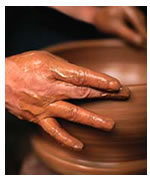 The Bible promises that, for those of us who truly love God, everything that happens in our lives will have the effect of molding us into Christ’s image.16 Some of us may have prayed a prayer similar to this: “Lord, I pray You’d make me more like You. I pray that You would conform me to the image of Christ.” Often, what we really want is for God to give us an anesthetic so we can be unconscious while He performs surgery on our hearts in order to conform us to Christ’s perfect character. We don’t want to wake up until the transformation is complete! We want the result but not the painful process.
But God doesn’t work that way. The Lord is concerned about what we go through, but I believe He is more concerned about how we respond to what we go through. That response is a matter of our wills. He allows the trials, temptations, and pressures of life to come so that we have the opportunity to respond either by trusting our feelings and life experiences or by taking Him at His word.
I have learned to get into the habit of taking God at His word—and now it is a habit! You and I can either grow accustomed to listening to our feelings, thoughts, and circumstances, letting them control us, or we can be in the habit of taking God at His word despite our feelings and life experiences. We need to choose with our wills to believe that His Word is truer than our feelings.
I have made a lifetime commitment to bank my life on the Word of God, and God has honored that commitment. And yet, there have been times when I could have easily gone back on my commitment because I couldn’t believe that anything was truer than what I was going through—times when my feelings have screamed 180 degrees in the opposite direction of God’s Word but over and over I have found God to be faithful to His Word.
(1) Romans 1:17, KJV (2) 1 John 5:4 (3) Luke 7:7 (4) Luke 7:9 (5) Hebrews 11:7 (6) Hebrews 11:8 (7) Hebrews 11:11 (8) Mark 4:40 (9) Matthew 24:35 (10) 1 Peter 1:25 (11) Isaiah 40:8 (12) Jeremiah 31:3 (13) 1 Corinthians 13 (14) Acts 10:34 (15) Matthew 26:37-38; Mark 14:33; Luke 22:44 (16) Romans 8:28-29
This article is an excerpt from Ney Bailey’s book Faith Is Not A Feeling. Copyright © 2002. Published by WaterBrook Press. Used by permission of the author.